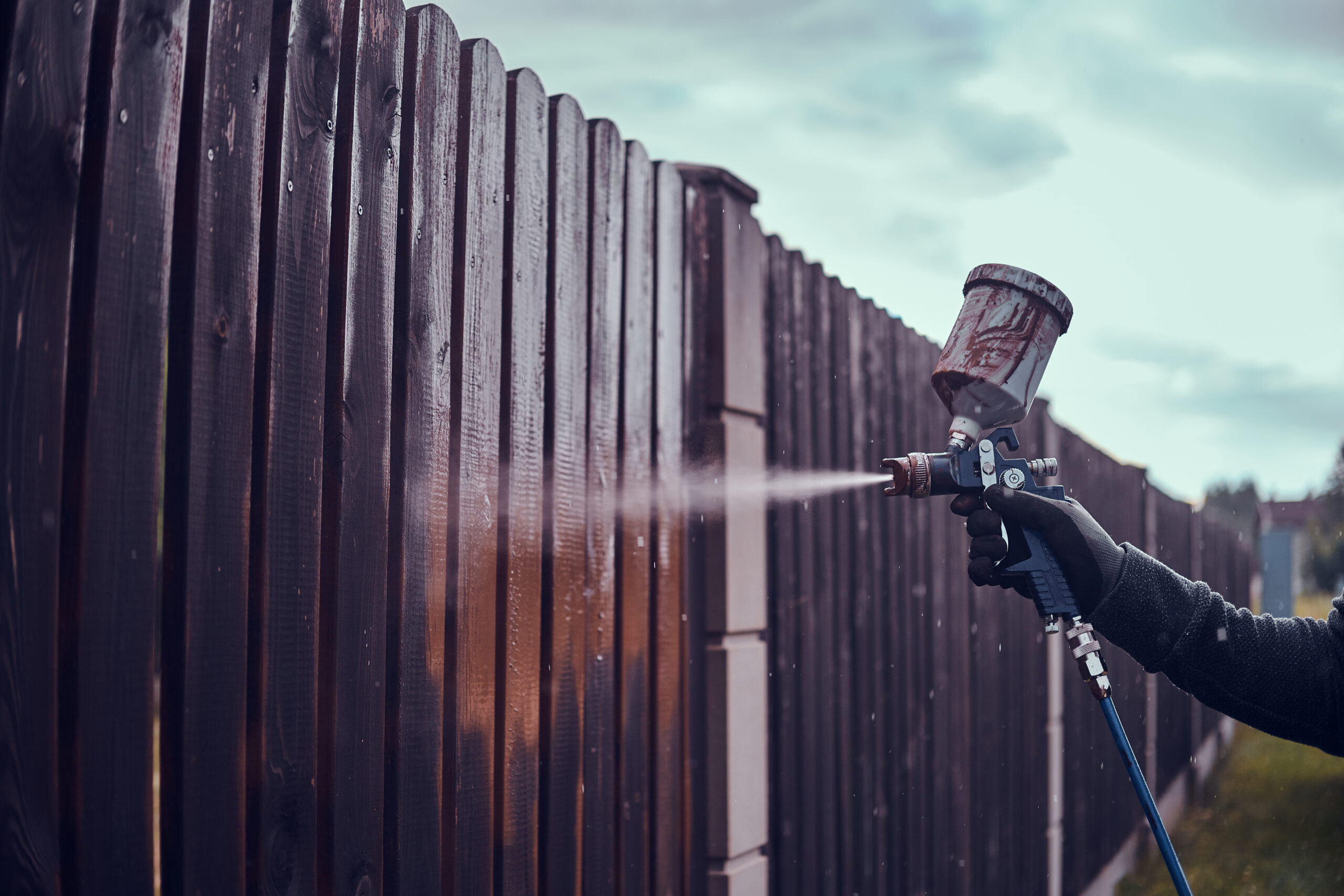
Spray painting a flat plastic panel is straightforward. You set the gun, maintain a steady pass, and as long as the surface is clean, you get a consistent result. But the moment you're dealing with parts that have fine ribs, narrow slots, snap-fit hooks, or walls under a millimetre thick, you're in different territory.
For general plastic painting service work, this usually doesn't cause problems. For precision plastic parts from injection moulding services, it can break the assembly. Understanding how spray coating behaves on detailed geometry is what separates a coating vendor from a process partner.
Why Small Features Collect More Coating Than You Expect
When a spray gun passes over a raised rib or a thin wall, the atomised droplets don't just land on the top face. For a part going into a tight-tolerance assembly, say a clip that needs to engage a specific depth, or a pin that has to fit a precise hole; this becomes critical.
This asymmetric film buildup is what causes most fitment and assembly failure. And because most coating inspection checks DFT on flat field areas, it often goes undetected until the part won't fit.
Key Challenges in Spray Coating Precision Plastic Parts
- Non uniform coating buildup on complex parts
- Increased coating thickness on edges
- Faster-than-expected dimensional buildup
- Overspray accumulation in recessed areas
- Static-driven contamination on plastic surfaces
- Difficulty maintaining uniform low film thickness
The Right Tools for Micro-Feature Spray Painting
HVLP spray guns such as High Volume Low Pressure are the standard for precision plastic painting service work. They atomise at lower exit velocity, which reduces turbulence around fine features.
For high-volume production, robotic spray is worth considering. A robot follows the same path at the same speed and distance every cycle. That removes operator variation, which is the main reason manual spray produces inconsistent film build on complex parts.
If your plastic injection moulding services produce tight-tolerance components and you need coating control to match, robotic spray is often the enabler.
Case Study — Connector Housing, Electronics Manufacturing
A connector housing needed PU coating for moisture resistance with pin tolerances held to ±0.03mm.
Manual spray was giving ±18 micron film thickness variation which is enough to occasionally block mating.
Switching to a robotic HVLP cell brought variation down to ±6 micrometers. No mating failures reported in over 18 months of production.
How Low-Build Coatings Work
Not every precision application needs a standard 25–40 micron coating. For parts where dimensional change from coating has to be minimal, low-build coatings targeting 8–20 microns DFT are the right starting point.
They provide the required surface properties such as the following:
- Chemical resistance
- Adhesion for secondary processes
- Surface energy modification
The trade-off is that the application window is narrower. You have less room between too thin and too thick. Process parameters need to be dialled in more carefully, and environmental control in the spray booth matters more.
Flow Rate, Atomisation, and Achieving Balance
Flow rate and atomisation pressure work together. Higher atomisation pressure produces finer droplets, which is generally what you want for detailed features.
But push it too far and you get excessive overspray and turbulence that bounces droplets off fine geometry rather than depositing them.
On very thin walls (under 0.5mm) aggressive atomisation can even cause slight deflection of the wall during wet film deposition.
Surface Preparation
Surface preparation is the most common cause of adhesion failures in plastic painting service applications.
Key requirements include:
- Removal of Mold release agents (IPA wipe or appropriate solvent)
- Verification with a water break test
- Static charges elimination
- Dust free handling environment
- Maintaining part temperature within the application window
Most standard releases are silicone-based, and silicone contamination prevents base coat from sticking reliably. Much like how to use primer coats for getting high-quality vacuum metalizing, establishing a flawless chemical bond starts with total contaminant removal. If you're seeing contamination specs that appear from nowhere, static is usually the reason.If you're seeing contamination specs that appear from nowhere, static is usually the reason.
Temperature and Humidity
PU coatings cure through a moisture-reactive mechanism. Too much humidity and you get surface blushing, haziness, micro-bubbles.
Too little and the cure slows enough that contamination has time to settle on the wet film.
Temperature affects viscosity within cold conditions thicken solvent-borne coatings and change how they spray. Hot conditions shorten pot life.
Does PU Coating Stay Dimensionally Stable After Curing?
Yes, cured PU coatings are chemically cross-linked and dimensionally stable. This chemical resilience is exactly why PU coating is the secret to long-lasting plastic surfaces, provided the substrate itself doesn't warp. They don't creep under ambient conditions. The risk is not the coating but it's the substrate.
Thin-wall plastic parts can warp in a thermal cure oven if they're not properly fixtured. UV-curable PU formulations cure at near-ambient temperature and eliminate this risk for compatible substrates.
Final Takaway
For precision plastic components where coating quality and dimensional control both have to be right, Rustagi Polymers takes care of plastic painting services and PU coating.
We also support spray painting solutions with the process engineering depth needed for tight-tolerance injection moulded parts.
Frequently Asked Questions
- How is spray painting adapted for micro-feature geometries?
Spray painting for tiny or detailed parts is adjusted like this:
- Use HVLP spray guns for better control
- Keep the spray pattern narrow
- Use a low paint flow to avoid excess buildup
- Apply multiple light coats instead of one heavy coat
- Use robots for consistent results in large-scale production
- Add masking fixtures to protect small features from getting too much paint
- What role do low-build coatings play in precision applications?
They achieve the required surface properties at 8–20 micron DFT, minimising dimensional impact on tight-tolerance features. They require tighter process control than standard coatings.
- How does spray pattern control improve finish accuracy?
Narrower fans give better placement control. Consistent speed and distance, most reliably achieved by robotic spray eliminate the film thickness variation that causes dimensional problems.
- How are flow rate and atomisation optimised for fine features?
Start with minimum flow rate for the required DFT, then tune atomisation for droplet size and uniformity. Roughly 80–150 cc/min fluid delivery, 1.5–2.5 bar atomisation for HVLP PU work.
- What surface prep steps are critical for precision spray painting?
- Mold release removal
- Verification with a water break test
- Static elimination
- Part temperature within the application window.
Thin film builds don't hide contamination the way thicker decorative coats might.
- How does humidity and temperature affect coating consistency?
High humidity causes PU surface defects. Low humidity slows cure and increases contamination risk. Temperature shifts viscosity and pot life. A controlled environment at 21 ± 2°C and 50 ± 10% RH is the production standard.
- Can PU coatings maintain dimensional stability after curing?
Yes. The coating itself is stable. The risk is substrate warping during thermal cure managed through fixturing or UV-cure formulations for thin-wall parts.