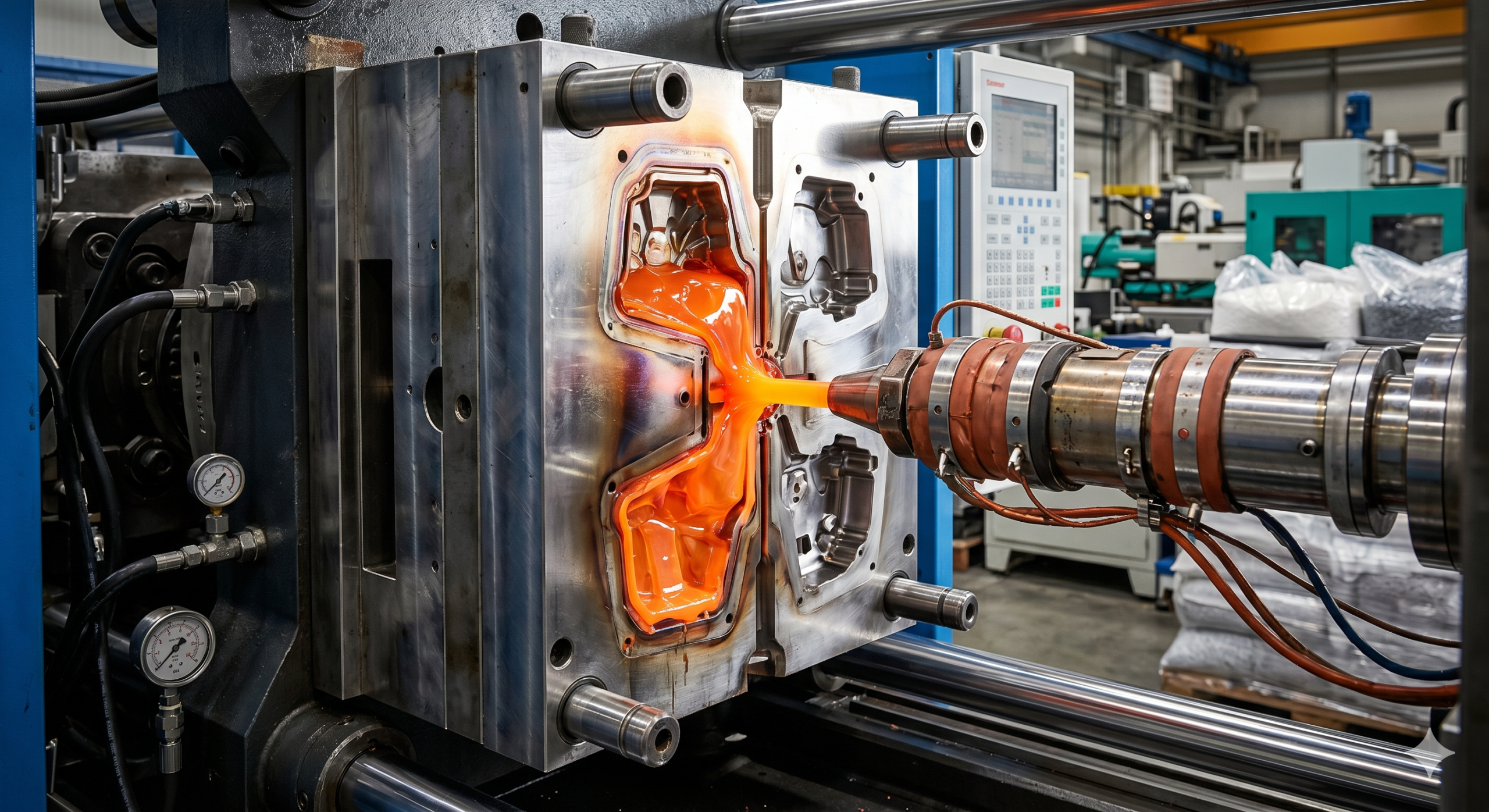
People spend a lot of time choosing the right plastic material for a part by running simulations, attempting material trials, debating over PP homopolymer and copolymer for half a week. However, the mold steel is sometimes selected with far less attention. Well, that’s literally going backwards.
The steel determines the following things:
- How long that tool lasts
- What surface quality it can hold
- How it handles abrasive materials
- How much maintenance does it need over a lifetime?
Let's discuss the key considerations.
What Types of Steel Are Used for Injection Molds?
The main elements in the order of increasing hardness and wear resistance are as given below:
- Pre-hardened steels (P20, 718): hardness is estimated to be 28-32 HRC. Machinable in the pre-hardened state. Good for general purpose moulds, prototype tools, and lower-volume production. It is cost-effective and easy to modify or weld.
- Through-hardened steels (H13, SKD61): Hardened after machining to 46-52 HRC. Delivers better wear resistance and usually preferred for high-volume applications and glass or mineral-filled materials.
- Stainless tool steels (S136, 420SS): Corrosion-resistant, can be polished to very high mirror finishes. Used for optical parts, medical components, or corrosive resin processing (PVC, POM, FR grades).
- Maraging steels (Maraging 300): Very high strength at moderate hardness, good for thin cores and intricate features where conventional steels would crack.
- Beryllium copper and other alloys: Not steels per se, but used for inserts in areas requiring rapid heat removal.
How Does Steel Hardness Impact Part Quality?
Hardness affects surface retention over time. A softer steel will degrade faster under the abrasive action of reinforced resins, meaning surface finish deteriorates and dimensions change.
For cosmetic parts where surface finish on the mould transfers directly to surface appearance of the part (graining, polishing, textures) steel hardness is critical to maintaining that finish across millions of cycles.
Harder steels also resist gate erosion better. Gates are high-stress areas where hot, pressurised plastic is forced through a small opening at high velocity. Soft steel here erodes quickly, causing gate size to grow, fill pattern to change, and flash to develop.
Example: A client producing automotive light bezels with a glass-filled nylon compound found their P20 mould was showing significant gate erosion and cavity surface degradation at around 200,000 shots.
Rebuilding key cavity sections in H13 extended the functional tool life to over 800,000 shots before next major intervention.
What is the Best Steel for High-Volume Production?
H13 and its equivalents (SKD61, 1.2344) are the standard answer for high-volume, demanding applications. Here's why:
- Good heat resistance handles the thermal cycling of injection moulding without fatigue cracking
- High wear resistance in hardened state survives abrasive and reinforced resins
- Good toughness relative to hardness doesn't chip or crack under impact
- Well-understood heat treatment behaviour and predictable results from established processes
For truly extreme volumes (hundreds of millions of cycles) you start looking at nitrided surfaces or specialised coatings on top of already-hardened H13. TiN and CrN PVD coatings can further extend wear life in gate areas and high-contact surfaces.
How Does Steel Selection Affect Maintenance Frequency?
This is where the total cost of ownership calculation really matters. Cheaper, softer steel up front means:
- More frequent polishing maintenance as surface deteriorates
- Earlier gate repairs or replacements
- More welding interventions as wear causes dimensional drift
- Higher risk of unplanned downtime when something fails mid-production
The right steel for the application reduces all of this. Yes, H13 costs more to machine than P20. But if it means the tool runs for 500,000 shots between major maintenance events instead of 150,000, the maths is clear.
This calculation becomes even more significant when scaling from single cavity to multi-cavity production — where every maintenance variable multiplies across cavities and steel selection at the tooling stage has compounding impact on total program cost
In our experience working with plastic injection molding companies on high-volume programs, the clients who resist the upfront investment in better steel almost always regret it by the second year of production.
Can Mold Steel Prevent Corrosion and Wear?
Material hardness, surface treatment, and sometimes specialised alloys all play into wear resistance.
- Glass-filled materials: H13 minimum, consider nitriding or coatings
- PVC or flame retardant resins: stainless steel grades mandatory
- Optical/cosmetic surfaces: S136 for best polishability and corrosion resistance
- General purpose unfilled PP, ABS: P20 is typically sufficient
How Do You Choose the Right Steel for Specific Plastic Applications?
Work through this decision tree:
- What is resin? Abrasive fillers and corrosive resins narrow your choices quickly
- What is the expected production volume? Low volume can use softer steels; high volume demands harder grades
- What surface finish is required? Optical quality needs stainless or equivalent; textured surfaces are more forgiving
- What are the geometry challenges? Thin features need tougher steels; thick uniform sections are less demanding
- What is the maintenance strategy? If rapid welding repair is important, softer pre-hardened steels are easier to weld
- What is the budget for the tool? Total cost of ownership over the expected tool life, not just upfront machining cost
Choosing a cheaper steel might save money at the tooling stage, but it shows up later as:
- inconsistent part quality
- rising maintenance costs
- unexpected downtime
- and early tool failure
On the other hand, selecting the right steel upfront aligns performance, durability, and production stability from day one.
But steel selection only delivers its full value when the people specifying it are also the people building and maintaining the tool. That's the core argument behind why in-house tooling matters more than machine size in injection molding — and why both decisions need to be made together.
Our molding manufacturers team at Rustagi Polymers factors all of this in when specifying tool steel for new projects and supports plastic painting service. We also offer foil pressed printing to support the molding process.
FAQs
1. What types of steel are used for injection molds?
Mainly P20 (pre-hardened, general purpose), H13 (through-hardened, high-volume and abrasive resins), stainless grades like S136 (corrosive resins, optical parts), and specialty alloys for specific requirements.
2. How does steel selection affect maintenance frequency?
Softer steels wear faster, leading to more frequent polishing, gate repairs, and welding interventions. Harder or treated steels (like H13 or nitrided variants) maintain surface integrity longer, reducing maintenance cycles and minimizing production downtime.
3. What is the best steel for high-volume production?
H13 (and equivalents like SKD61 or 1.2344) is the industry standard. It offers a strong balance of hardness, toughness, and thermal fatigue resistance. For extreme volumes, nitriding or PVD coatings are often added to extend tool life further.
4. How does steel hardness impact part quality?
Harder steels maintain surface finish and dimensional accuracy longer, resist gate erosion better, and hold up against abrasive reinforced resins.
5. Can mold steel prevent corrosion and wear?
Yes. Stainless grades resist corrosion from moisture-generating or corrosive resins. Hard steels and surface treatments like nitriding or PVD coatings significantly reduce wear.
6. How do you choose the right steel for specific plastic applications?
Take into consideration the resin type, production volume, surface finish requirements, part geometry, maintenance strategy, and total cost of ownership.