There's a conversation that keeps coming up in manufacturing facilities, particularly among procurement heads and product designers. The conversation usually starts the same way: someone brings up compliance costs, or an environmental audit comes back with a list of concerns. And suddenly, vacuum metalizing starts looking a lot more interesting than it did before.
The deeper reason vacuum metallizing is replacing traditional chromium plating in an increasingly wide range of applications is that it simply performs better in more situations due to its lower environmental impact, reduced compliance costs, and greater design flexibility.
Let's get into the specifics and applications.
Why Vacuum Metalizing is Gaining Momentum?
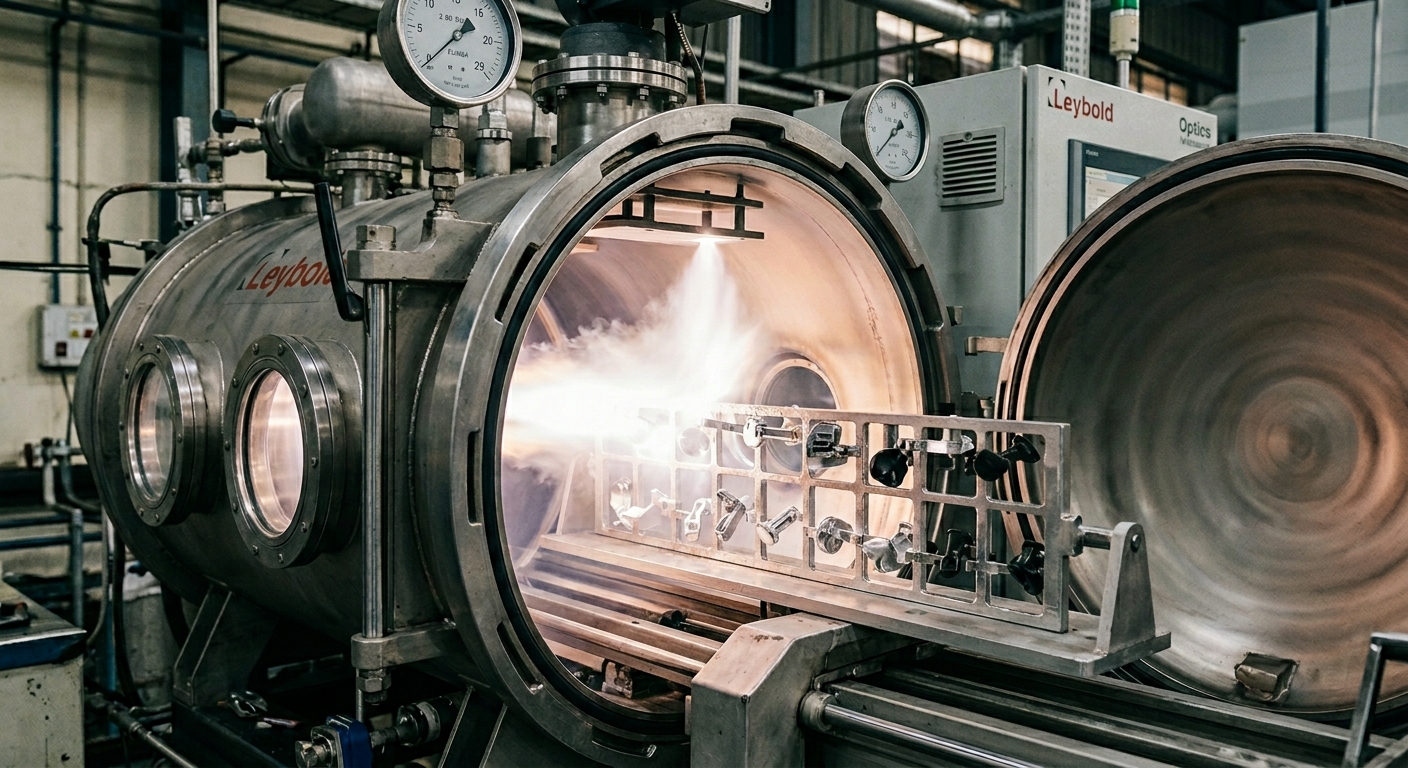
Manufacturers running traditional chrome lines face ongoing costs related to wastewater treatment, air emission controls, worker health monitoring, and hazardous waste disposal. Vacuum metallizing which involves evaporating metal (mostly aluminum, though zinc, copper, and other alloys) inside a high-vacuum chamber and depositing it onto a substrate.
It is being preferred because of :
- No liquid effluent
- No hexavalent chromium compounds
- No hazardous air pollutants in the conventional sense.
- Operates in a closed environment with a clean environment.
Case Study: Automotive Supplier, Tier-2 Component Manufacturer
A Tier-2 supplier producing decorative trim components for a major OEM in the NCR region was spending approximately ₹18–22 lakhs annually on chrome plating effluent treatment and compliance management.
Results - After transitioning their decorative exterior components to vacuum metallizing with UV-cured topcoats, their environmental compliance costs dropped by roughly 60% in the first year.
The OEM also signed off more quickly on the supplier qualification, because the audit trail for vacuum metallizing was substantially simpler.
Top Factors for Considering Vacuum Metalising Over Chromium Plating
Regulatory Risk
If you're supplying into automotive export markets, particularly to EU, UK, or North American OEMs, hexavalent chrome is a material of very high concern (SVHC) under REACH. Vacuum metallizing sidesteps this entirely.
Weight
Chromium electroplating requires a conductive substrate, typically steel or copper and the chrome deposit itself adds measurable weight.
In case of vacuum metallizing, the substrate can remain lightweight, and the entire coated assembly still comes in well below what the equivalent chrome-plated part would weigh.
Surface Appearance and Reflectivity
Chrome plating produces essentially one visual signature: bright silver with a slight blue-grey cast.
Vacuum metallizing, by varying the deposited metal and the topcoat tinting, can produce gold, bronze, gunmetal, copper, and other decorative effects that would require entirely separate plating processes to replicate.
For products where surface branding, markings, or multi-tone decoration also need to be applied post-finishing, it's worth understanding how multi-color pad printing functions on plastic parts — a process that integrates well with vacuum metalized surfaces to deliver sharp, durable graphics without disrupting the base finish.
Case Study: Interior Lighting Component, Consumer Electronics
A consumer electronics accessory brand was using electroplated ABS bezels on a premium desk lamp product.
They switched to vacuum metalized PC/ABS with a tinted PU topcoat.
The result was a warmer visual tone their design team preferred, a 12% improvement in measured luminous efficiency from the reflector geometry, and a 22% reduction in per-unit finishing cost.
Their chrome plating supplier couldn't offer the tinted finish at comparable quality or cost.
Automotive Interior and Exterior Applications: What Works Better?
Vacuum metallizing is extremely well established in automotive interior trim such as
- Instrument panels
- Center console surrounds
- Door handle inserts
- A/B/C pillar covers
- Ventilation bezels
- Steering wheel accent
These are applications where decorative chrome appearance is required but where the surface doesn't need to withstand prolonged UV exposure without a quality topcoat.
- For exterior applications, the picture is more nuanced.
- For wear and dimensional applications in heavy engineering, electroplated hard chrome has capabilities that vacuum metallizing isn't designed to replace.
What Role Do Substrates Play?
Electroplating requires a conductive substrate, or a substrate that can be made conductive through an electroless process.
Vacuum metalizing deposits metal on essentially any surface that can tolerate the vacuum and temperature conditions in the chamber including
- ABS
- PC
- PC/ABS
- Nylon
- Polypropylene
- PMMA
- Glass
- Ceramic
- Foams and fabrics.
The range of substrates that can be metallized is substantially larger, which matters for product designers working with novel materials or unusual geometries.
It's also worth noting that the quality of the molded part itself — particularly how it was tooled — directly affects how well the metalized finish sits on the surface. Read this guide Why in-house tooling matters more than machine size in injection molding explains how tooling precision upstream determines surface uniformity and finish consistency downstream.
How Clear Coats and Topcoats Drive Long-Term Durability
The durability of a vacuum metalized finish is largely determined by two things:
- Quality and adhesion of the base coat
- Protective capability of the topcoat.
The aluminum layer itself is thin and relatively soft. Modern UV-cured topcoats for vacuum metallizing are formulated with UV stabilizers, abrasion-resistant cross-linking agents, and adhesion promoters tuned to the specific substrate and base coat chemistry.
A well-specified topcoat turns a potentially fragile vacuum metallized surface into something that can withstand the wear, chemical exposure (hand cream, cleaning agents), and thermal cycling of an automotive interior environment.
Let us check out how vacuum metallizing is better than chromium plating:
| Key Factor |
Vacuum Metallising |
Chromium Plating |
| Process |
Dry coating in a vacuum chamber |
Wet chemical electroplating |
| Material Fit |
Ideal for plastics and precision components |
Mostly suited for metals |
| Finish |
Smooth, uniform, high-gloss finish |
Can have uneven buildup on complex shapes |
| Detail |
Excellent for micro-features and fine geometries |
Risk of filling or blurring small details |
| Environment |
Eco-friendly, no toxic effluents |
Uses hazardous chemicals (like hexavalent chromium) |
| Speed |
Faster cycle times, scalable |
Slower due to multiple chemical steps |
| Cost Efficiency |
Lower operational and compliance costs |
Higher due to chemical handling and regulations |
If you're evaluating vacuum metallizing for your next project, Rustagi Polymers brings experience in vacuum metallizing across automotive, consumer, and industrial applications particularly in the Greater Noida manufacturing sector.
Their team can walk through substrate options, topcoat specifications, and qualification support for your specific application.
Frequently Asked Questions
- Why is vacuum metallizing more environmentally friendly than chrome plating?
It doesn't use hexavalent chromium or other heavy metals in liquid baths, generates no hazardous wastewater, and operates in a closed vacuum chamber with no significant air emissions.
- How does vacuum metalizing reduce regulatory and compliance risks?
The finished product contains no REACH SVHC compounds like Cr VI, which simplifies export documentation and OEM supplier qualification audits in regulated markets.
- What weight advantages does vacuum metallizing offer over chromium plating?
The deposited aluminum layer in vacuum metalizing is measured in angstroms, essentially negligible mass addition.
Chrome plating stacks (copper, nickel, chrome) add measurable weight, particularly on complex plastic substrates.
- How do surface appearance and reflectivity compare between the two processes?
Vacuum metallized aluminum achieves higher specular reflectivity than electrodeposited chromium.
Chrome has a characteristic blue-grey cast; vacuum metallized finishes can be varied in color through topcoat tinting.
- Is vacuum metallizing suitable for automotive interior and exterior parts?
Very well established for interior trim. Suitable for exterior with appropriate UV-stabilized topcoats that meet OEM weathering specifications. Not a replacement for functional hard chrome on wear surfaces.
- How does vacuum metallizing perform in corrosion and abrasion tests?
With quality topcoat systems, vacuum metallized parts can meet 96–240 hour CASS and neutral salt spray requirements.
Abrasion performance is topcoat-dependent and suitable for interior touch applications with 2H–4H UV-cured finishes.
- What substrates can be metallized that cannot be chrome plated?
Polypropylene, PMMA, nylon, glass, ceramics, certain foams and fabrics can tolerate vacuum and moderate heat. Electroplating is restricted to conductive substrates.
- How do clear coats enhance durability of vacuum metallized finishes?
They provide UV protection, abrasion resistance, chemical resistance, and mechanical protection for the thin aluminum layer.